

Our Research Branches
Space is the primary lens through which we study the mind, serving as the foundation for all of our work. From this core focus emerge several key branches. Our interest in space naturally extends to questions about other ‘core’ representations, such as number and time. In investigating these representations, we have also come to examine foundational processes like adaptation — both as a tool for probing representational structure and as a phenomenon worthy of study in its own right.

SPACE
TIME

ADAPTATION

NUMBER

Each of these branches complements each other: Understanding how objects affect the perception of space informs how we study events and time. Number has been a critical case study in our work on adaptation. And so on. These sorts of connections are of special to interest to us; it is no accident that many of our papers span more than one of these branches!
Representing Space
Understanding how our minds make sense of space.
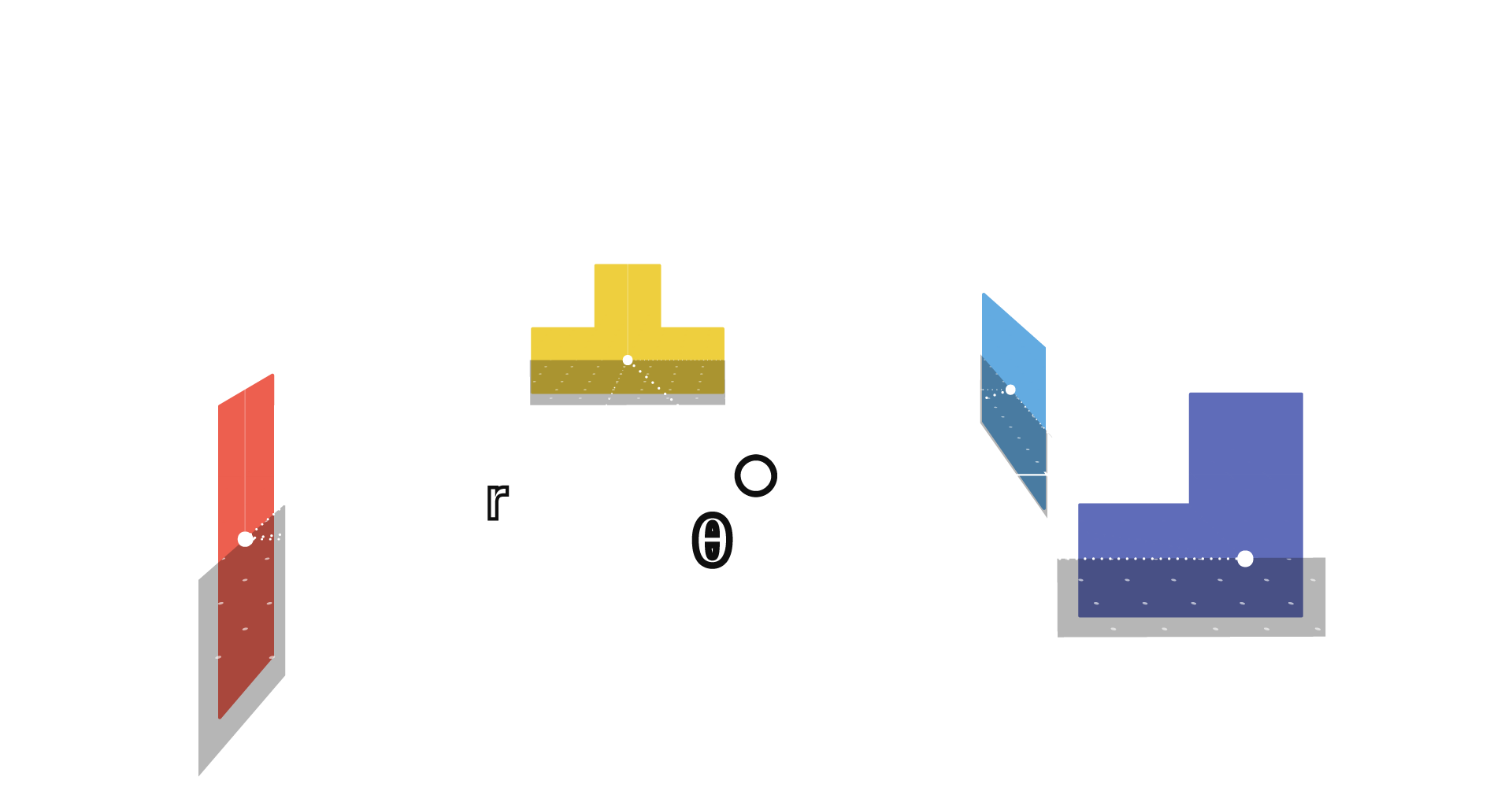
In mathematics, we often conceive of two primary formats for representing 2D space — Cartesian coordinates and polar coordinates. Space can also be represented not with respect to precise, metric detail but coarse, topological relations. Thus, a question arises: In what format does the mind represent space?
Representing Time
Understanding how our minds make sense of time.

Weeks are divided into weekdays and weekends; years into quarters and seasons; lives into stages like childhood, adolescence, and adulthood. How do these discrete structures, or event, affect our sense of time — and what other factors shape our sense of when?
Adaptation
Understanding how our minds adapt to what we are sensing from one moment to the next moment.

If you stare at a colorful image for a short while and then look at a blank slate, you’ll see a vivid, colorful aftereffect. That’s a classic case of perceptual adaptation. But what is adaptation, exactly? Is it strictly a perceptual phenomenon? We want to understand how adaptive processes shape perception and cognition alike.
Representing Number
Understanding how our minds create a sense of number.
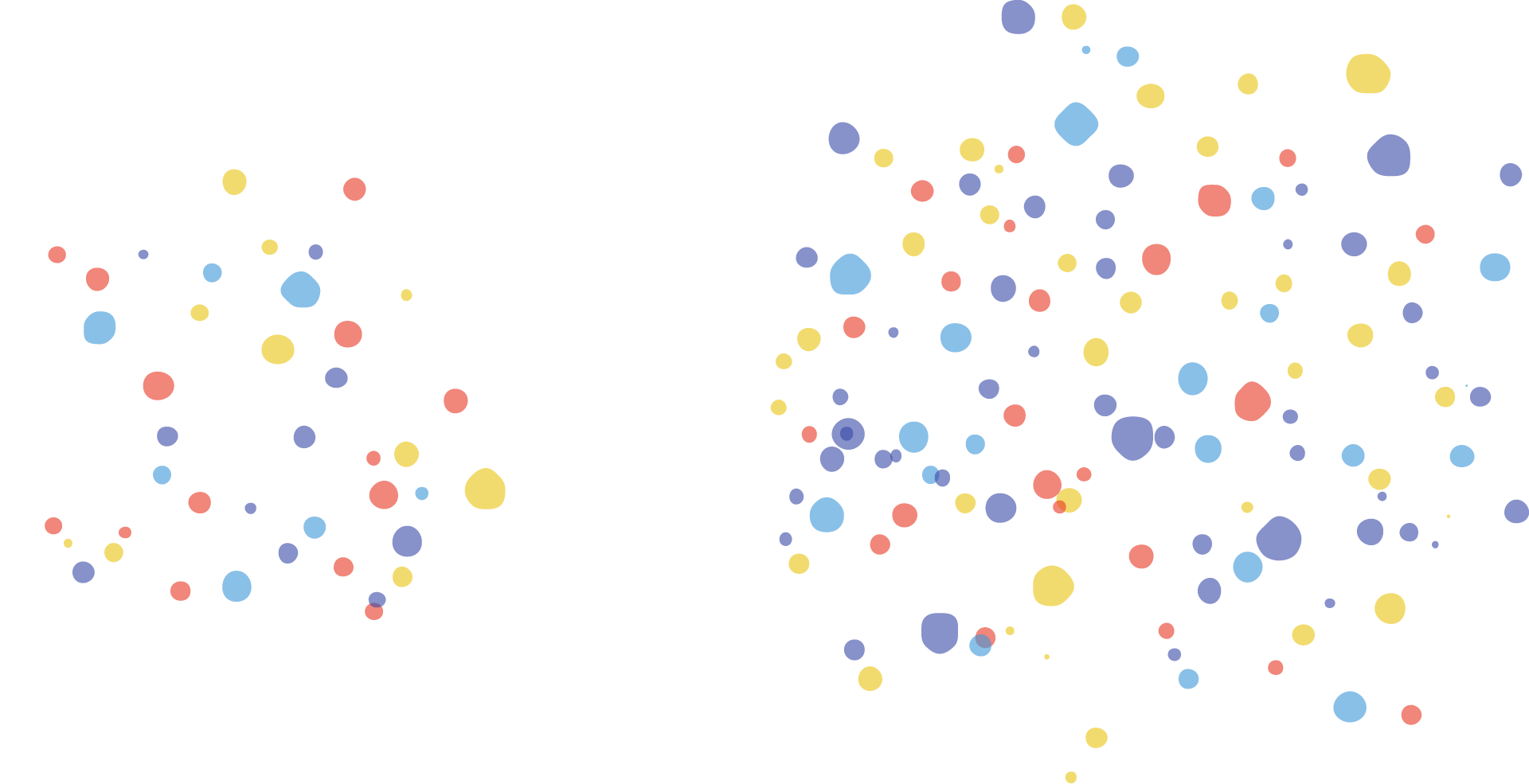
Some features, like color, are obviously perceptual. Other features, like value, are obviously not. But then there are a few curious features, like number, that seem to straddle this boundary. In our work, we often investigate representations of number as a way of understanding the boundary between perception and cognition.
Across all our research branches, there’s a central motif — an interest in the primitive ‘formats’ of mental representation.
Spatial Cognition Lab
This content was designed in collaboration with Thoughtscape.